I Stutter
By Geoffrey Greif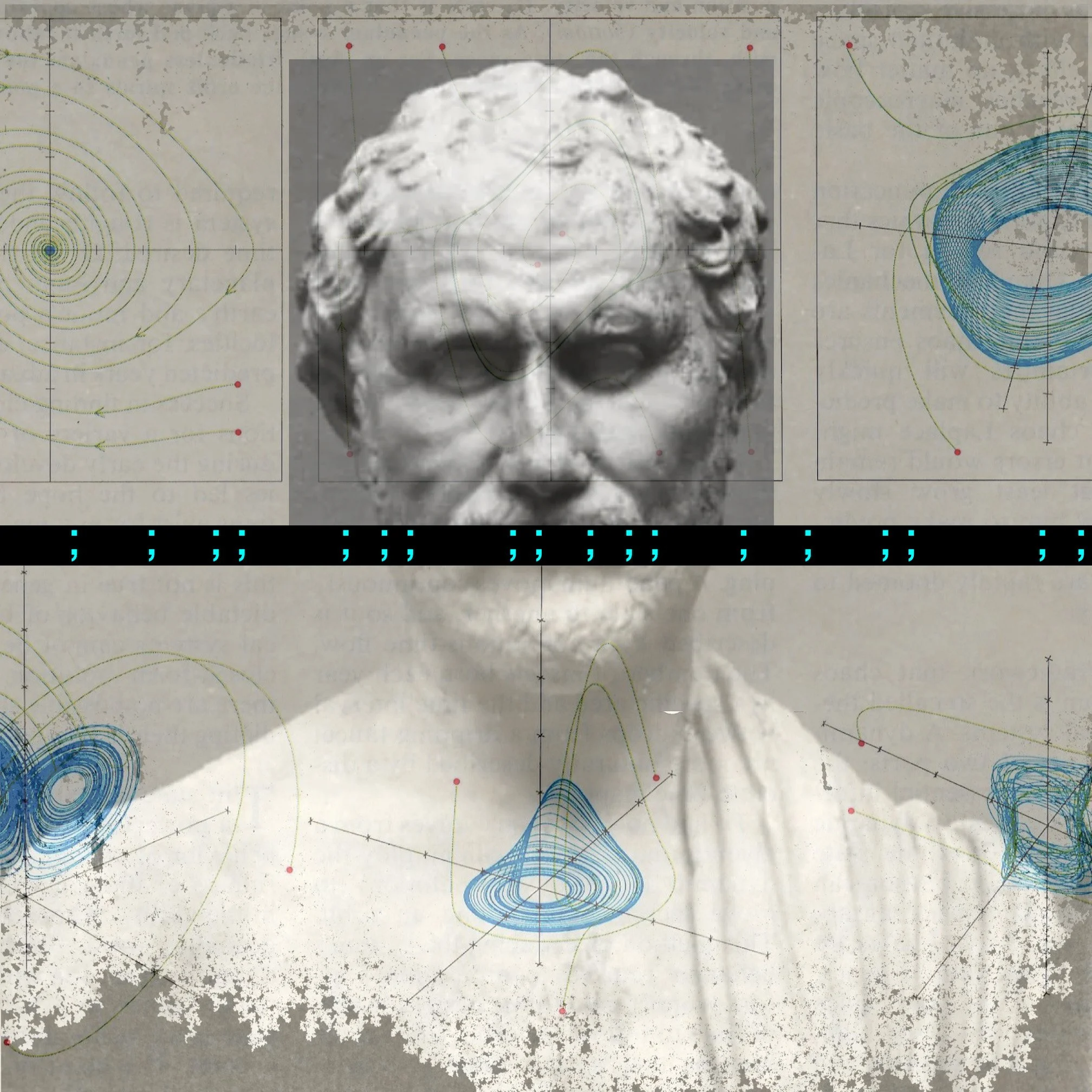
Demosthenes, who stuttered in ancient Greek. Illustration by Austin Hughes.
I stutter. I have always stuttered, not uncontrollably these days, but sometimes when I am tired or stressed. I worry, though, that with a naturally occurring age-related decline in brain functioning, my ability to forestall stuttering will be overcome, a wave coming up on shore and erasing whatever sandcastle I have sculpted as a defense. Demosthenes, the ancient Greek statesman who stuttered, put pebbles in his mouth to help with articulation and became a great orator in Athens. I have been a professor of social work for over 50 years with a career that encompasses teaching group and family therapy and writing a bunch of books. Have I, in later life, become a great orator like Demosthenes? In the right context, yes, but I am still plagued occasionally. Think Joe Biden. Actually, think Hugh Grant! Please. Think Porky Pig when I was a kid and at my nadir. “That’s all, folks.”
Everyone knows what stuttering is: a speech disorder that usually starts in childhood between the ages of two and three; it is even a descriptor for a deke or fake-out in football, the stutter step. Stuttering or stammering, unlike, say, dyslexia, is not a hidden disability. It is marked by repetitions at the beginning of sentences, blocking on words, an inability to say certain words, and concomitant facial spasms, like eye closing, blinking, and mouth twisting. Men are four times as likely to stutter as women.
Its causes have been linked to brain processing, as in faulty wiring in a circuit board. It has been linked to genetics—although not in my family of fluent speakers. My father was anxious, but never to a noticeable or dysfunctional extent, so perhaps a little genetic hand-me-down there. And stuttering has been linked to exogamous stress, i.e., pressurized situations. Our house was not a pressure cooker any hotter than the next home. So, maybe some small road signs flashing warnings but nothing that puts me on a highway of certainty to understand why I stutter.
People who stutter typically have the most trouble with
telephoning (thank God for the advent of emails and texts);
saying certain names with difficult beginning sounds;
speaking certain words;
conversing in a foreign language or ordering in a restaurant (in France I once ordered quiche because I could not get out the word for sausage).
People typically do not stutter when
talking to themselves;
singing;
screaming.
Most children outgrow it with one percent of the population dragging it around like an albatross. Stuttering may affect self-esteem; course selections in high school and college; sports (no quarterback can stutter); work trajectory and profession; family interactions; love life; friends.
***
The youngest of three children, I was late to speak. My siblings are three and six years older than me, and have always been articulate, fast talkers. They were highly successful academically. I was a top student in grade school despite a stutter and then fell into the middle academically from seventh grade on, maybe as the work got harder and verbal demands increased, maybe as I felt more academic pressure to measure up to my siblings, or maybe as I was distracted by girls and rock and roll. It was the 1960s, after all!
As I left my childhood behind, my stuttering persisted. I didn’t name it then, but in retrospect, I can apply ambivalence and ambiguity to what I was experiencing. In my recent books, I have used these concepts to understand why intimate relationships are messy. Ambivalence is the push and pull, the sweet and sour, that occurs in many relationships. We have great affection for those we care about, but we also may find hurt and disappointment in those relationships leading to mixed feelings about them—and about ourselves for feeling mixed. We can also feel ambivalence about our actions when we know we need to say or do something, but fear doing it. In my case, I avoided speaking and felt bad about doing so. Ambivalence is often tied up with ambiguity, a cognitive process where a situation can be interpreted in more than one way. Ambiguity is stoked interpersonally when one is unclear about why someone, for example a loved one, acted as they did. It can also lead to not understanding the cause of one’s own actions, in my case stuttering. Ambiguity can be linked to ambivalence; when we are left in a state of confusion, we don’t know what to feel.
Looking back, I now realize I was moving out into the world caught between wanting to connect with life and fearing being rejected when speaking, people edging away from me, going to get another drink at the bar and “nice meeting you.” The push and pull left me unclear about what to do. If I attempted to guide someone or take leadership in high school and could not do it fluently, where would that leave me?
Today, I am trying to get comfortable with ambivalence and ambiguity. This includes ambiguity about how I came to stutter. The possibilities for the etiology of a disability like mine are too numerous. Somethings we just don’t know.
***
I was lucky with my family. Despite the usual sibling squabbling, we never hit below the belt. Because of my stutter, I was obviously and constantly vulnerable to being mercilessly teased. They had their soft spots too, but not one arrow that could be considered cruel was ever loosed from our quivers.
My parents were keenly aware and asked at different times in my childhood if I wanted to go for speech therapy. I declined, believing “I can do this on my own.” They did not retreat completely. On a two-week summer trip when I was seven, I saw a stuffed Humpty-Dumpty that I coveted. My mother offered it as an award if I did not stutter during the trip. By day fourteen, the stuffed toy was mine, red pants and all. Hours later, back to stuttering.
My luck continued with school. I attended a Friends School for 15 years, from nursery through 12th grade. Based on a Quaker philosophy that manifested as an accepting, noncompetitive environment, I was not teased. By grade school, physicality reigned. The tallest kid and the fastest runner in my grade, I garnered respect. During recess, I was often picked first on the playground for teams. No unrelenting tale of woe here.
But things changed during morning assembly the first week of seventh grade. Surrounded by girls in blue uniforms and boys in ill-fitting sport coats, I had the crushing realization that one day, like all high school seniors, I would have to stand up in front of the school and read a passage of my choice before announcing the hymn to be sung that day. In front of 350 people fidgeting on metal folding chairs that were removed from the auditorium for upper school dances! FUCK! The next six years of assembly (figure 180 school days a year x 5 years + 90 days of 12th grade if I ended up halfway through the year = 990 assemblies before my turn) were like the sound of nails dragged across a blackboard.
Four years later, I still struggled. In 11th grade, my French teacher, a slim wizened man, who was also the college advisor, made fun of me in class. I learned from him that balbutier in French means to stutter when he asked in French and then in English if I was familiar with the word. How does one respond when trapped into acknowledging something one does not want to acknowledge?
“Je ne sais pas, M-M-M-Monsieur,” I managed.
Classmates looked down at their assignments and were lovingly silent. A year later, when he and I met to discuss my college applications, it was difficult to feel supported in my selections.
Where did I fit on the social spectrum during those years? I was captain of the tennis team and an editor of the school newspaper. I had a girlfriend and was lead guitarist in a rock band that emulated the Beatles, Paul Revere and the Raiders, and the Rolling Stones. We played high school dances and the occasional club gig. I was outwardly successful and outwardly a potential figure of pity or ridicule when I spoke, particularly to strangers. Two things can be true at once, right?
By high school, I figured out some talking workarounds, though they had limited utility. Wearing headphones and speaking into a microphone, i.e., hearing my voice amplified and slightly delayed, were runways to fluency. Unfortunately, those are not easy solutions in social situations, nor is singing or screaming as part of normal conversation. “Please pass the salt” sung loudly in the key of F sharp can make one an unpalatable seat mate in a noisy high-school lunchroom.
The microphone helped when, finally, deep breath, drum roll, in my senior year, I stood on that feared stage before the assembly of those uniformed girls, now more skillfully made up than six years earlier, and boys with artful psychedelic ties. It was 990 or so assemblies after my pulse had first hit 160 with the dawn of expectation.
I could hear my voice boom through the auditorium as I hid my shaking knees behind the dais and recited a poem I had written with metered stanzas and a solid beat that began with words I felt comfortable saying: “One, two, three, four, / The clock ticks on the wall / One, two, three, four / So many soldiers fall / One, two, three, four …” And so on, ending with the unresolved “One, two three …”
An anti–Vietnam War poem at a pacifist school, brief but effective. I escaped the guillotine and slowly began to believe that, while there was no complete pardon, increasingly, intermittent parole was granted when I talked.
***
Having rejected attempts earlier as a kid, I went to speech therapy in high school and again in college, to marginal benefit. I saw a psychiatrist in graduate school for a few months seeking a more deep-seated answer, also to marginal benefit.
Next man up in my attempts at greater fluency was Martin Schwartz, a speech pathologist who developed the Passive Airflow Technique. I attended his workshop at the behest of my then speech pathologist girlfriend and now wife. (I know what you’re thinking. Don’t even go there!) With Schwartz’s approach, a person exhales before starting to speak—a way to get the words out with an easy airflow instead of blocking on opening sounds. Some small successes followed, but the approach felt stilted to me as the pace of speaking set by my quick-talking siblings reverberated in my young-adult head. In the normal flow of conversation and repartee, where speed of response is key, not everyone wants to listen to someone talking laboriously or wait for an exhalation before requesting the pepper.
Next, I went to a hypnotist. This was when hypnotism was entering its heyday. No longer just a parlor game, it was becoming a clinical intervention for curing a wealth of ills. When the National Guild of Hypnotists was formed in the early 1950s, 90 percent of its members were stage performers; only a handful used hypnosis in psychotherapy. By the time I was entranced by it, it had become more mainstream, though Freud had touted it at one point in the 19th century before it fell out of favor. In my own training as a psychotherapist after I completed my MSW, I was inspired by the work of the psychiatrist and hypnotist Milton Erickson and his remarkable interventions catalogued by Jay Haley in Uncommon Therapy. Erickson used misdirection with his patients to get past their defenses. When someone was hypnotized, they were not told their arm was heavy; they were told their arm might be heavy, thus turning control back to them. The idea was to distract first, give a semblance of control to the patient, and then send a posthypnotic suggestion for change to be carried out when no longer in a trance.
Sessions began with me staring at a small whirring device that resembled a kaleidoscope. Bolstered by soothing sounds from a sound system and the quiet of my hypnotist’s voice, as I sat in a soft leather chair in a dimly lit space, I was induced into a trance. The induction included the posthypnotic suggestion that I would speak clearly. Excited by some success, I took a weekend certification course in how to conduct hypnotherapy. I applied it to myself and hypnotized others who feared public speaking even though they didn’t stutter. It never occurred to me that someone would fear public speaking if they were fluent. Now the patient was the doctor.
Whereas stuttering had always been front and center in my consciousness, it gradually began to recede, a smaller, quieter but still constant blip on my radar. Insight from a weekend long marathon encounter group in La Jolla resonated. Encounter groups, emanating from the west coast, were de rigueur in the 60s and 70s for progressive-leaning therapists and others seeking a deeper understanding of their interpersonal processes. Groups would meet weekly over a course of months with a no-holds-barred approach to communicating or could be held in a marathon weekend session with breaks for sleep back at one’s hotel or home.
Sitting in a group of 10 on plastic chairs and sharing feelings with a supportive, nonintrusive leader present, I learned from the group interaction—which included activities like a trust fall where the group catches each participant in a backward freefall, and running around in a park and yelling to get energized after sitting for hours—that I was not the only one riven with self-doubt, worrying about being accepted by friends and strangers. People who I had initially sized up as calm and competent were admitting to the opposite. Oh! It is not just me with inner calamitous thoughts. Duh and YEA! That rocket of insight sparked an upward trajectory in my self-esteem.
I was also growing up in other ways (the frontal lobe, which affects speech, finishes maturing in the mid-to-late 20s), partially through the demands of my burgeoning commitment to my profession where I needed to speak well to help others, and partially through parenthood and the fear I would infect our daughter with the stuttering virus. I worried that she, hearing me stutter, would also. Every typical three-year-old hesitation on her part raised my anxiety. She emerged unscathed, as did our second daughter, born four years later.
“I was moving out into the world caught between wanting to connect with life and fearing being rejected when speaking.”
I kept looking for improvement. I took a public speaking class which was another way of approaching the beast. Like one of Milton Erickson’s interventions, it was a distraction, a different avenue into a problem by disguising it as something else. Cognitive reframes loomed large for me in my clinical work, and this was a way to approach speaking from a nondeficit perspective: not How can I not stutter? but How can I speak well? Forget the stuttering stuff; become a better public speaker and make the blip smaller on the radar.
Each week a student would give an oration and be critiqued. I did OK, maybe not at the Demosthenes level, but not at a Looney Tunes level either. Then I was hired and rehired as a part-time college instructor as I entered a doctoral program. By any objective standard, including my teaching evaluations, I had made it to the middle of the pack. No one complained about my speech.
I came to understand, maybe from my rock musician days, that the beat and having a “microphone,” if only symbolically, were solutions. Lecturing in front of a class and adding a little volume began to work for me. I set the pace; I held the megaphone. Students questioning me, initially off-putting as I might have to say specific and feared words, became a game that I would invite. I took control by asking for questions, leaning in rather than leaning away. Walking around the classroom gave me the power to use physicality, my playground stature coming to the fore, to help get words out. Maybe most importantly, I came to understand that great teaching is not just fluency but deep knowledge of content, humor, classroom management, positive regard for students, and maybe, from my rock band days, knowing when to play the fast song and when to play the slow song. Multiple teaching awards followed, which added to my confidence.
Growth happens in fits and starts, sometimes driven by necessity, sometimes by the need to please oneself, and sometimes by the need to please others, real or imagined. I may never know for certain what caused and changed my stuttering. Hypnosis? Confidence? Aging?
I still bear a handful of faint scars, and not just from my French teacher. A salesman in a music store imitated me at my worst when, as a 23-year-old, I tried to negotiate the price of a guitar. As a side hustle, I would buy and sell used guitars. That required knowing the value of an old Martin or Gibson guitar and hoping the store did not. I asked in front of other customers the price of the Martin I was plucking and then offered a lower one. My eye movements, sound blocks, and repetitions were at their worst and the 20-something salesman mimicked me in his response. I took a deep breath, repeated my offer without hesitation and, after my offer was declined, shuffled off, embarrassed. Other scars? A well-meaning friend told me years later that when we first met in eighth grade, he thought I was crazy because of how I spoke; a former girlfriend’s brother screamed at me to stop stuttering, a condition he had overcome as a child; a college fraternity brother who I had known since childhood opined publicly to other brothers that I should not be a candidate for vice-president of the frat house because I stuttered—he was shouted down and I won the election.
***
Old fears still pop. Watching Joe Biden, who claimed to have overcome a childhood stutter, was painful, the nadir being his dismal 2024 debate performance with Trump, which signaled his death knell as candidate. Rational or irrational, I believed each time a commentator mentioned Biden’s stuttering, people would be reminded of me.
Then there is Michael. A sweet 20-something accountant and wonderful golfer, Michael stutters, essentially unable to complete a sentence fluently. We met by chance on a public golf course and have similar work schedules, which allows us to play rounds together. For Michael, I imagine golf provides a quiet space for his skilled play, with few demands for rapid speech. Head nods, hand signals, and arching shots that bend towards the flag speak for themselves. Every golfer knows what a nicely struck ball sounds like: “Thwack.” When we tee off, he is a reminder of the younger me and what I still might become if my sandcastle erodes.
Who knows what the accumulation of each foray into therapy or self-directed healing accomplishes for me or for anyone else? Who knows where comfort with needing to speak and fearing to speak intersect? On a sunny day, it may be getting to par, with each successful shot, “thwack,” followed by another, without hesitation.
Geoffrey L. Greif, PhD, LCSW-C, is Distinguished University Professor Emeritus at the University of Maryland School of Social Work and the author/editor of 17 books and numerous articles and chapters. His newest book, Interracial Marriage: How Diverse Couples Navigate Relationships in a Divided Time, was published in May by Columbia University Press. He is currently a student in the Johns Hopkins University Master of Arts in Writing program.
Published June 2026