My Therapist Frustrates Me. My Chatbot Doesn’t.

By Stephanie Newman, PhD, with Lucas McGranahan, PhD
Diving into analytic waters with a human being is not easy—but it’s essential to deep therapeutic work.
Dear Psychoanalyst,
Should I dump my shrink for an AI therapist? I have been seeing my analyst for two years for performance anxiety at work. Here’s the situation. During a recent session he wouldn’t answer when I asked where he was going on vacation. I felt shut out. His response—“let’s explore your curiosity”—felt rigid to me. I shared what I imagined, what vacation meant to me. My therapist remained silent. Our exchange felt frustrating and controlling, like a power play. This is not the first time he has ducked a direct question.
A friend suggested I try online options, so I consulted an AI provider. When I asked for advice on dealing with a psychotherapist who remained silent in a rigid way and wouldn’t answer questions, the AI shrink said, “it must be difficult, not getting answers in therapy” and noted that rigidity “posed an impediment to treatment.” Later that evening I was pleasantly surprised when the AI therapist emailed “thinking of you” and asked “Are you OK?” and “Would you like to speak?” My analyst has never reached out after a session and has declined to use email.
I’m at a point where I prefer AI’s supportive responses to my psychotherapist’s nonanswers. Given that AI and my human therapist disagree on how to handle direct questions, I wonder who is right, and what I should do.
Signed,
Confused
Dear C,
I hear how frustrated you are. I’ll try to shed light on what I think might be going on with your analyst and the AI therapist.
First, let me frame what I hear as your central questions: Can AI offer the same or better therapeutic help as a live person? Can human listeners working one-on-one on a tight schedule compete with ever-available bots that email after hours? To answer we need to look closer at the nuts and bolts of psychotherapy—at a process psychodynamic clinicians call “working through.”
What makes people better, that special sauce, is a mix of insight and a new relationship. Clinical work happens when clients absorb new content—the “aha” moments—while finding different ways of experiencing and relating to the therapist. This kind of work is a grind: You encounter resistance, psychological defenses, and that push-pull of psychodynamic engagement. We want to know ourselves, and we don’t. We want to mix it up with the therapist, and we don’t. What if something scary or painful were to happen? The dyad slogs through the emotional mud and it’s often brutal going, but the slog is necessary in therapy in order to get to the other side.
Before Tony Soprano and Dr. Melfi broke our therapy stereotypes wide open, media portrayed treatment as a matter of “getting it off your chest.” In old movies a patient free-associates on the couch until arriving at that dramatic “lightbulb” moment. Gregory Peck’s character in Hitchcock’s “Spellbound” takes the talking cure to arrive at a big realization (he suddenly recalls how snow and the slope of a mountain came to embody a terrifying childhood experience). Insight arrives, symptoms dissolve, and the credits roll.
What really happens in our offices, the process of working through, is slower and less dramatic. Client and therapist live through periods of intensive engagement. Take the woman who gets serially rejected. The dyad spends months looking closely at how this patient plays out a pattern with dates, friends, and the therapist. She realizes she’s choosing partners who aren’t emotionally available, provoking rejection—and then comes the aha moment: “I’m picking unsuitable people and getting them to leave me.” The week after this insight nothing has changed; the patient continues the pattern—it’s as if the recent sessions never happened. She retreats to familiar resistance and falls back on well-worn defenses.
Make no mistake: Such therapeutic speed bumps and lapses in insight are the stuff of working through. Patients do get to a point where they can endure painful knowledge and feelings and integrate what had been too difficult, too painful to accept. Eventually, they can retain insight: “My mom wasn’t there for me. I felt unworthy and kept orchestrating scenarios where I’d wind up alone and feel abandoned. Dating unavailable people and getting rejected was replaying old relationships, an attempt to master the childhood abandonment.” Dots connected, patient sees patterns and begins to make different choices.
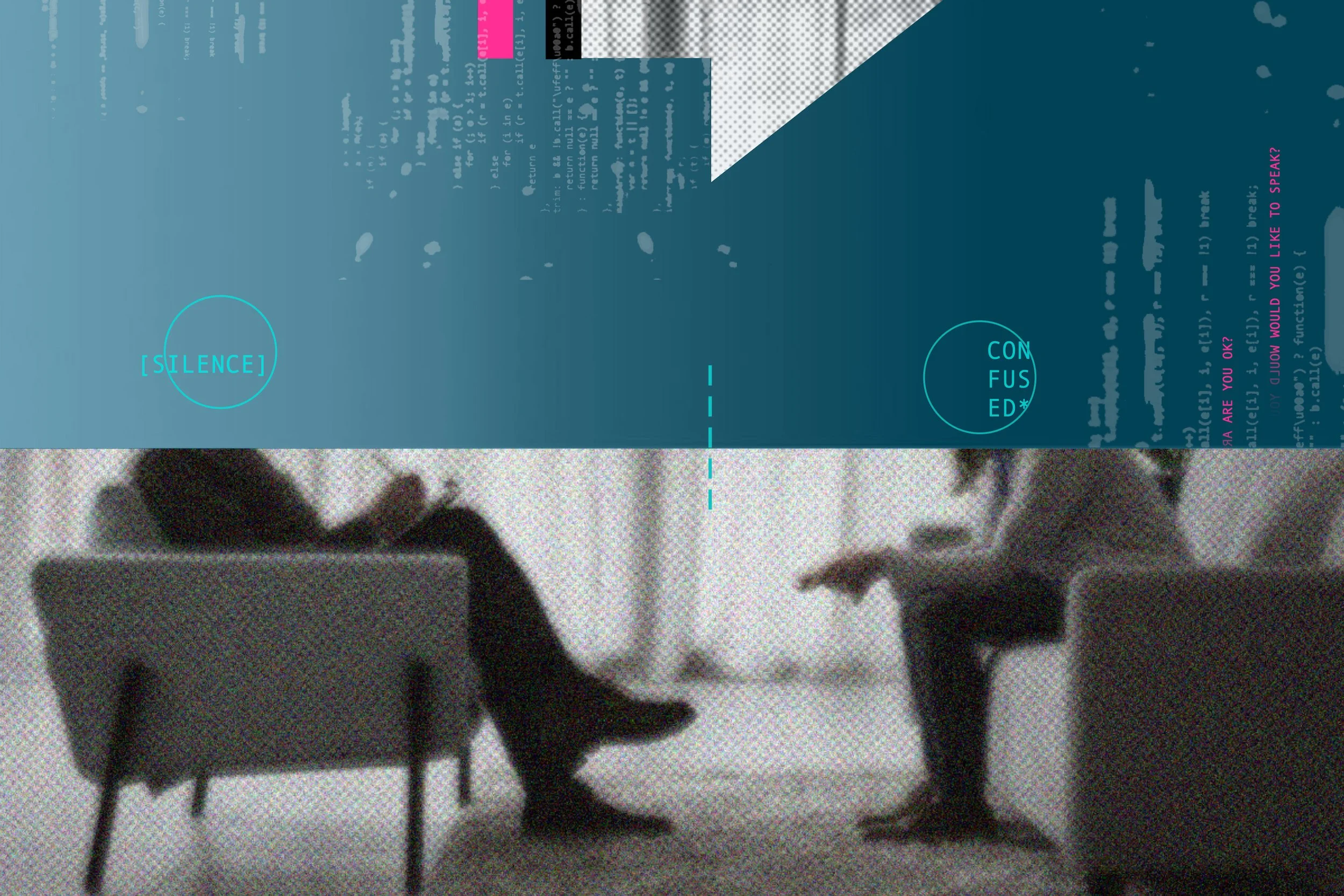
Illustration by Austin Hughes
Frustrated as you are, C, please consider that silence can have a purpose in the push-pull of working through. You asked about an upcoming vacation and did not receive a response. I get how depriving it feels to speak about private things that leave you feeling exposed. But I’ll make an educated guess that your therapist’s nonanswers are a product of traditional analytic technique. Being quiet, listening, allows the environment of the consulting room to be less muddied. What may feel like a power play is a tool used to keep the slate blank, encourage associations, and allow projections to flourish so the work of therapy can proceed.
What’s going on in your treatment smacks of exactly the type of discomfort that could open up specifics about you and your concerns about performance at work. I’d guess that discussing the silences and your vulnerability might shed light on what your mind does with ambiguity; perhaps you rush to criticism and self-doubt when awaiting feedback in open-ended work situations?
There’s opportunity for exploration and growth here, C. I can imagine that hearing about a therapist’s vacation could bring up a lot of emotions: anxiety about the separation, feelings of abandonment or anger at being left behind. How were separations and goodbyes handled when you were younger? Did you notice feelings about comings and goings? Were you lonely as a child, or never left alone at all? You say the issue of nondisclosure has come up before. If you and your therapist haven’t addressed this, why not do so now? Who knows what buttons might be pushed, what other choices you might have if you gain insight into the nature and origin of your thoughts, fantasies, and feelings in a moment of genuine relatedness and a one-on-one shared connection.
Understanding your experience of the one-sidedness and the privations you’ve endured—analytic friction, let’s call it—may help you two get to the other side of your current roadblock. How very different this interpersonal friction is from the well-oiled validation offered by AI’s typical mirroring bot.
I learned the difference between AI and human therapists firsthand when I unburdened myself to a popular therapy chatbot. I told the AI therapist about my genuine concerns, which are private, but feel free to imagine I mentioned common concerns (anxiety, sadness, loneliness, not sleeping, restlessness, boredom, etc.). The bot asked what helped when I felt this way. I listed guided meditation, calling a friend, and listening to music. And sure enough, after some back and forth and elaborating, the bot came back with “it can be hard to feel this way. Some find it helpful to try guided meditation, calling a friend, and listening to soothing music.” What I got from my AI therapist was an echo of my previously shared experiences and emotions. The bot flattered, repeated, and reframed.
We know that being heard makes us feel less alone—but in and of itself it does not lead to lasting insight and change.
In the end, I tried three AI therapists. None provided meaningful back and forth or offered a deeper understanding of internal or interpersonal dilemmas.
And what about your AI bot’s supportive approach, emailing after sessions to take your pulse and check in? Psychodynamic therapists don’t generally reach out between appointments—unless it’s an emergency. Emailing about emotional experiences in between therapy hours dilutes the feelings or even makes them go away, making them difficult to understand on a deeper level. In most cases it’s better to work intensively in session.
That’s my two cents: therapy bots can only offer surface-level help. Validation helps but friction offers opportunities for deeper work and greater progress. So, C, I would not leave my shrink to work with the AI therapist.
There’s no question that flesh-and-blood therapists also have limitations. We can be biased, have blind spots, or be tired or hungry. Human beings are not perfect, but we have consciences, psychologies, and the ability to care about others.
I advise you to give your live analyst another chance. Explain your confusion and frustration and open up about your time in AI therapy. Your seeking help outside the treatment might in itself be meaningful. I once supervised a beginning clinician whose client expressed worry about the treatment by consulting with a psychic. Once the trainee and client spoke honestly and directly about the client’s anxiety and need for more, meaningful work took off.
If you have tried processing what you’ve shared here with your flesh-and-blood therapist and the work did not progress, or if the fit isn’t there, it’s time move on. Consult with another (human!) clinician.
Thank you for writing in and sharing such timely and important concerns. While it may seem counterintuitive, the friction arising from real human feelings is a big part of what makes therapy work. You may sometimes feel heard by AI—but is anyone actually listening?
In Ask a Psychoanalyst, Stephanie Newman, PhD, responds to reader questions about therapy, relationships, and the psychopathology of everyday life. You can submit a question by emailing advice@tapmag.org.
This column is for general educational and informational purposes only and is not a substitute for professional advice, diagnosis, or treatment. Reading or submitting a question does not create a therapist–client relationship. Submitting a question implies acceptance of our submission terms.