I’m on the Couch; He’s in the Saddle
A cowboy outfit spurs an analysis
By Erik Gleibermann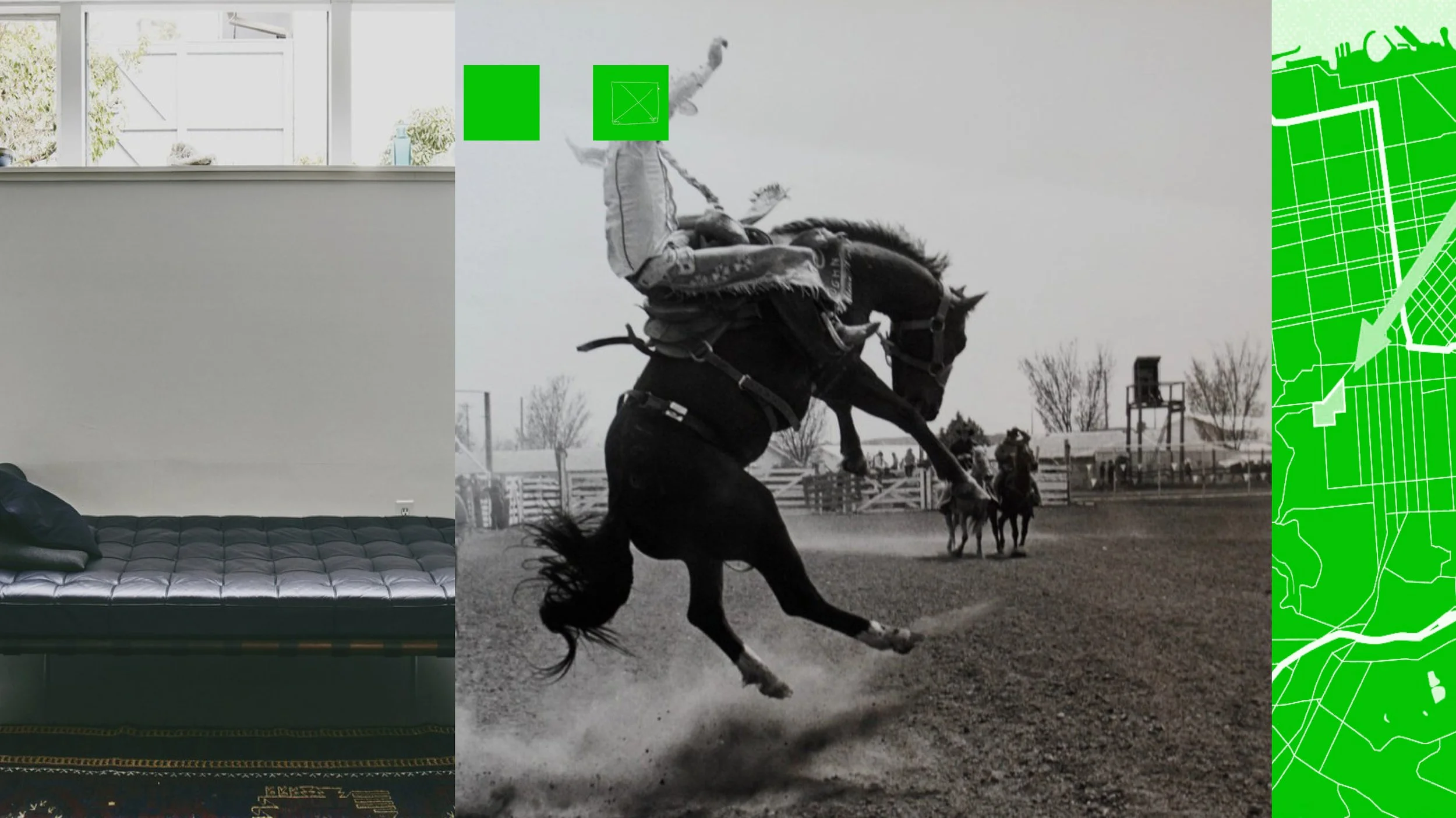
Illustrations by Austin Hughes
The first time I ever saw my analyst outside he was walking near San Francisco’s Castro Street wearing the chestnut cowboy hat that for a decade my wild mind has animated into a shape-shifting totem. From this accessory, paired with the oiled, burnt sienna boots that flash before my face as I lie on the couch four times a week, I’ve invented an elaborate biographical storyline. He must have grown up in rural Wyoming, I imagine, or more likely, Tennessee, since he’s referenced Dolly Parton as well as Freud. When I’m feeling sexually unsettled or otherwise anxious, my mind assigns the cowboy persona assless chaps in the city’s South of Market BDSM leather bars. In the less frequent moments when I find tranquil solitude, he shifts again, now a tender loner hiking the Sierra foothills, a brotherly guide questing the psychic frontier for an affirming manhood.
I’ve cast us as contrasting, but nearly fraternal twins. While we’re both cisgender white men in our early 60s, Marty’s queer with an Anglo surname, passion for country music, and supposed rural working-class background, whereas I’m a straight, middle-class New York Jew who writes professionally about Black culture. We both shave our heads.
Despite the kinship I feel with my analyst, my wounded childhood self, which struggles to receive any intimacy, has also spurned him, a legacy of being raised by an emotionally invasive mother and remote father who both suffered chronic depression and rejected Jewish spirituality. My grandparents transmitted their immigrant trauma to my parents, who fled New York ashamed of their Jewish identities and provided me only meager love. During an initial therapy in my 20s I named the cut-off, falsely proud self I had to construct as a child, “the little boy who doesn’t need a hug.” When I began to work with Marty nearly 30 years later, I was still compulsively self-reliant and chronically isolated, bound between a fierce hunger for love and shame-based repulsion toward nurturing. Despite his compassion, I was able to receive his care in only the smallest doses.
The dark, free-floating energies of this repulsion have cathected the Western outfit. I’d silently scorn him upon entering his office. Why does he wear those same square-toed boots and jeans every fucking day? For years I knew the Western wear was potent with dark transference, but I resisted confronting its messages. In the last year, however, as the wrangler persona continued to activate subterranean prejudices, fears, envy, and rage, ever so gradually it has catalyzed my growth into awareness and healing, singularly channeling the work through intersecting signifiers of raw gay male sexuality and rural working-class whiteness. Marty has judiciously probed the hostility, the grief, the self-hate and sexual unease as well as the elusive love circling within me. And as I’ve built trust with him, the frontier figure from Dolly Parton land, an analyst keenly aware of sexuality, race, and class in America, also helps me engage the complementary work of investigating my troubling social blind spots and prejudices.
I’d long avoided voicing the cowboy anti-fetish. I much preferred our comfortable twinship. I felt particularly bonded by our shared cultural literacy, the intellect providing safe haven for intimacy. We’re in sync as political progressives and popular culture critics who can riff equally on Baldwin, Foucault, Václav Havel, the Oresteia, Lil Nas X, Abbot Elementary, MILFs, and Alabama football.
We’d first met nearly 20 years ago when he was a therapist at a UC San Francisco day treatment program I attended during a debilitating suicidal depression. He steadied me and I felt immediate kinship. I was disappointed to learn he had no private practice. Ten years later he approached me in a South Asian restaurant and offered his card, Shiva’s six arms waving on the wall behind. Months later, I began walking twice weekly to his Castro office to sit in a chair facing him, the surrounding space adorned by a gilded comedy-tragedy mask, a backlit Wonder Woman display, two dark African masks, and eventually, a photo of my cat Jericho, for years the only living being I could freely love. I’d gaze through the open window at the broad Monterey Cypress in the Victorian building’s backyard while I fashioned monologues, embedded with offbeat dialog, of my absurdly grievous dating life, constantly reminding him that the therapy was failing to improve it. “The intimacy work in here never translates into finding a girlfriend out there,” I carped.
“Psychoanalysis doesn’t work that way,” Marty reminded me once again. “You try to control therapy the way you’ve written your book,” he added, referring to my memoir-in-progress that explored relationships between my Jewish healing journey and African American life.
Therapy always flowed easily on the narrative surface. Even after I began intensive analysis in year seven and lay on the couch, I comfortably filled the four weekly hours with fluid storytelling about my troubles. But my waking fantasies and dreams coded an underlying, verbally inaccessible conflict of threat and desire. I feared Marty might touch my neck on impulse as I lay vulnerably horizontal. In one dream he cut through a thick gray blanket covering my lap. Obviously, castration fear, I noted. “Sure,” he replied, “but might you be even more afraid I could actually help cut you free from your smothering inhibitions?”
Kink, leather, a riding crop, anal penetration, uninhibited power play fucking. All these the Western gear embodied. Marty explained that I was understandably sexualizing the fear of my engulfing mother, whose hug comprised a threat, not affection. And I feared my own unbridled sexual aggression in part because my callous father had been sexually unfaithful since the day my parents married. One day when I mentioned Lil Nas X’s “(Montero) Call Me by Your Name” video, which I’d analyzed in a magazine article, I was repelled by Marty’s carefree description of the country-inflected rapper’s lap dance with the devil. “Interesting,” he observed, “since you were the one who brought up the video. I wonder if you envy my supposed sexual ease.”
I denied feeling sexually inhibited. No, I flirted boldly on Hinge and chased Caribbean women in Spanish, even if most of my forays resulted in dramatic, but unconsummated encounters with barely available women. I claimed to feel at ease crossing paths in our queer gym near Market and Castro, a den of male ceremony where I indulged a twice-weekly gay contact high, admiring men’s sculpted physiques while enjoying the occasional compliment of my own. I worked out in black muscle tank and Under Armour tights to Jimmy Somerville’s “Smalltown Boy” falsetto, while relishing my hetero double life as I gazed sidelong at the asses of shapely women doing pull-downs and squats in pastel Lululemon body suits.
But at any moment I might wobble. One day when we first passed each other, I’d felt initially poised performing the ritual analyst-analysand public head nod, but my inferiority feelings rippled when I noticed him at the bench press. Shit, he’s benching 150. (I did five sets of 110.) My alarmed psyche deftly pivoted to pity, near cousin of contempt. He must be injured with such a narrow range of arm motion, I half-sympathized. When I recounted the moment in the next session Marty said he heard my characteristic unconscious wish to debilitate him. Looking back, I perceive how sad my vaporous gratification of false superiority was. I turned the gym’s communal joy into emotional solitary confinement.
Analyzing my racial experiences, Marty and I have tread on more outwardly steady ground, perhaps because we are both privileged whites and my unconscious mind feels shielded from othering him or conjuring fraught transferences. The whiteness defining my cowboy archetype neither stirred nor fazed me. He offered me a psychoanalytic case study when I was researching a magazine piece about how white people can address race issues in psychotherapy. In session, I’d review how the formative relationship questions that drove my memoir reflected my childhood wounds, how I’d thwarted love with my ex, Reneé, blamed her, racialized and rationalized my choices because I couldn’t bear the intimacy, how I’d disowned the pain of my racially prejudiced father having abandoned me.
One day I was again discoursing on the memoir, earnestly interrogating how as a teen the culture’s toxic prejudices had stained my psyche. I imagined Marty sitting behind, boots crossed, pensive, perhaps even gaining his own racial insights. I quoted a passage about Danny Wagner, a white kid who punched me in the jaw on opening day of 7th grade to prove his alpha male standing, then weeks later a Black girl, Monica Fly, retaliated against my best friend for his earlier insult by booting him in the face as he kneeled to tie a shoe. I quoted the text: “In the dank soil of my unconscious she became the original private seed incarnating America’s angry Black woman, as Danny Wagner took his place beside her, my Platonic ideal of the enraged, white trash male.” I exhaled, taking in the grand arms of the cypress outside, anticipating Marty’s approval of my lyrical race reckoning. But Marty discerned the veiled hostility beneath my cool and measured tone. “You resort to contempt,” he observed. I felt blindsided and my chest tightened with ire. Was Marty perversely shaming me?
“Contempt? No, I’m digging into my unconscious. I’m examining how the culture imprints these fucked-up stereotypes.” While objectively true, my point denied an intent Marty had pinpointed.
“You used a slur for white working-class people when you have the fantasy I come from a rural working-class background.”
“I’m not using a slur,” I countered, “I’m referencing a corrosive term elitists use. I’d never use it. I’ve called out people who did.” My progressive resume did not deter him.
“And yet in this room you’d never reference a corresponding racial term for a Black person.”
“It’s different.”
“How is it different?”
“That word has been violently weaponized by whites across US history. ‘White trash’ is disdainful. It isn’t murderous.”
“And yet you now used it again. You’re being destructive. You have so much shame about possibly getting closer to me, you’re compelled to denigrate me and keep yourself alone.”
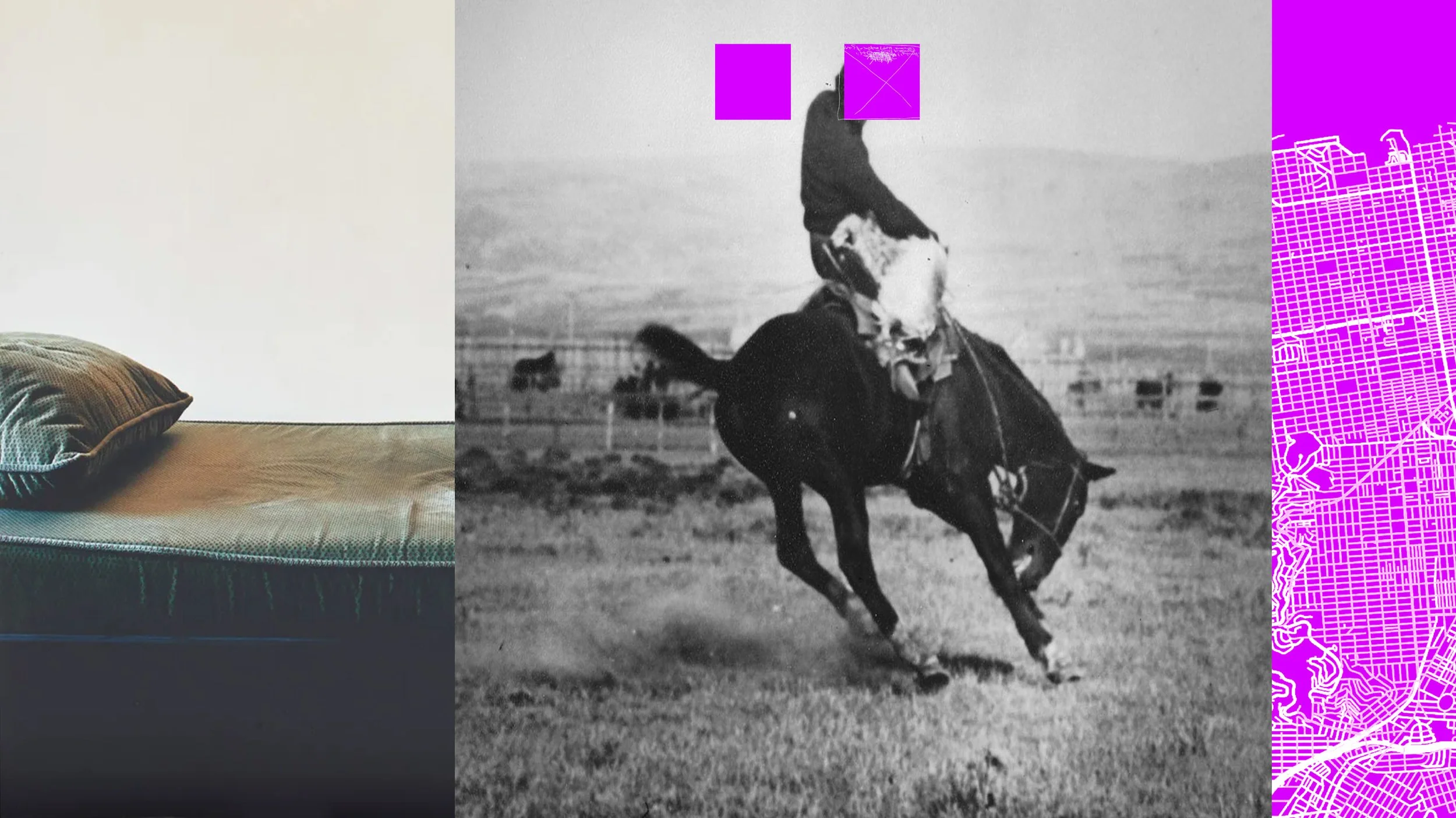
That evening at home, I found myself mortified. I needed to take stock. Was I really a racializing classist deploying prejudice to render Marty inferior, whose help my wounded self would therefore never deign to receive because I fantasized he attended Wichita State before his conservative evangelical family disowned their sensitive son for being gay and he fled for San Francisco, a brave and inspiring young man yet still a notch beneath me?
The following week I was expressing consternation about a cousin I’d recently visited who I reported was raising her two children in a tiny unkempt apartment. By criticizing her parenting, I defended against my envy, as I have no children myself. I excoriated her for resorting to air mattresses and letting the three-year-old draw with crayon on the walls. The older daughter was approaching adolescence and didn’t even have her own room. According to my American middle-class anthropological schema, children need their own space for healthy emotional development. “That place isn’t fit to raise children,” I declared. “It’s emotional child abuse.”
“It’s not child abuse,” Marty said. “Dolly Parton was raised with 11 siblings in a loving home that had only two rooms.”
“My cousin’s not working class. She’s choosing that situation. She makes at least twice the money I do and lives in Santa Monica.”
“I’m just pointing out that you’re weaponizing class to undermine your cousin.” He then remained quiet, the silence echoing how I’d again obliquely targeted him as well as my cousin. But I was not ready to face the truth in his presence. I had to nurse myself alone.
“I’m sorry,” I said when I returned. We then discussed guilt as agent for repair rather than self-recrimination. My voice broke. I realized I was apologizing as much to myself as Marty, for by othering him, I was equally depriving myself of human touch. “The only times I ever let you care for me,” I cried, “I’m either broken open by crisis or the feelings are buried in some dream. The little boy who didn’t need a hug has to shut caring down.”
“You’re receiving it right now.”
“Yes, a little. A little is all I can manage.”
I’d already been detecting in recent months that to become more vulnerable I needed to slow down, to really listen, include Marty, share the room, hear my body and breath, stripped of words. Nothing scared me more than silence.
Meanwhile, my socially conscious adult self went on YouTube and watched old Hee Haw and Beverly Hillbillies clips, shocked to realize how as a child I’d internalized their patronizing caricatures and consigned country music to a remote, alien America. On the couch, I reviewed how little contact I’d had with small-town America, which I conflated with Southern life. I remembered an experience at Yale when I’d unsuccessfully applied for a newspaper internship in Nashville. I flew down and took a cab to the offices, where the editor in cowboy boots grilled me on my journalism ethics. I was certain he wanted to entrap me as some soft-edged, Ivy League elitist kid. “Did you visit Broadway?” Marty asked, referring to Nashville’s famous strip of honky-tonks and country bars.
“No,” I said. “That musical world held no interest for me.”
I followed up the next session leading with a joke. Joking helps to hide my tenderness. “Marty, we both love Cowboy Carter,” I mused, referring to Beyoncé’s Grammy-winning hip-hop/country crossover album.“That means we’re finally musically bonded!” On a weekend trip soon after, I was browsing the famous Mercado of East LA and came upon a stall filled with an array of impressive-looking cowboy boots. I chose one from the rack and studied its intricate design. “Marty would love these,” I laughed to myself. I took a close-up photo and another of the whole collection to show him.
The healing path for me isn’t linear. It’s more like a sidewinder rattlesnake writhing in desert heat. When I look back a year and beyond, I see small seeds, like the evening I was biking down the backside of Twin Peaks, uplifted by a Bay Area zephyr and a skyline sweep. I noticed a silhouette ascending in cowboy hat and jeans. I slowed, and upon crossing, we nodded silently, like saddled rangers on the prairie. This was a nice moment that came from the adult me. But the recent one in LA was fully another story. It came from the little boy.
Days after returning from LA, on a Friday afternoon, I saw Marty across the street near the office standing below a canopy of trees. That hat, those jeans, the boots suddenly were no longer separate artifacts. They became an ensemble, Marty’s public signature of masculine conviction, maybe even the garment of a hero.
At home that night I lit Shabbat candles and recited the Hebrew blessing. I enjoyed a quiet meal in solitude, the hillside lights stretching up toward Twin Peaks through the curved bay windows. Then I slipped on headphones and lay back on the couch. I closed my eyes to receive her exquisite trill. “My world is such an empty place. I need someone to fill the space. And here I am.” Yes, I was ready tonight, ready to let go and dream of Tennessee.
Erik Gleibermann is a San Francisco–based social justice journalist and memoirist. His writing has appeared in The Atlantic, The Guardian, The New York Times, The Washington Post, Slate, Oprah Daily, The Black Scholar and World Literature Today, where he is a contributing editor. His memoir-in-progress is Jewfro American.
Published May 2026