Awais Aftab of “Psychiatry at the Margins” on Freud, science, and the hope for psychoanalysis
By Austin Ratner
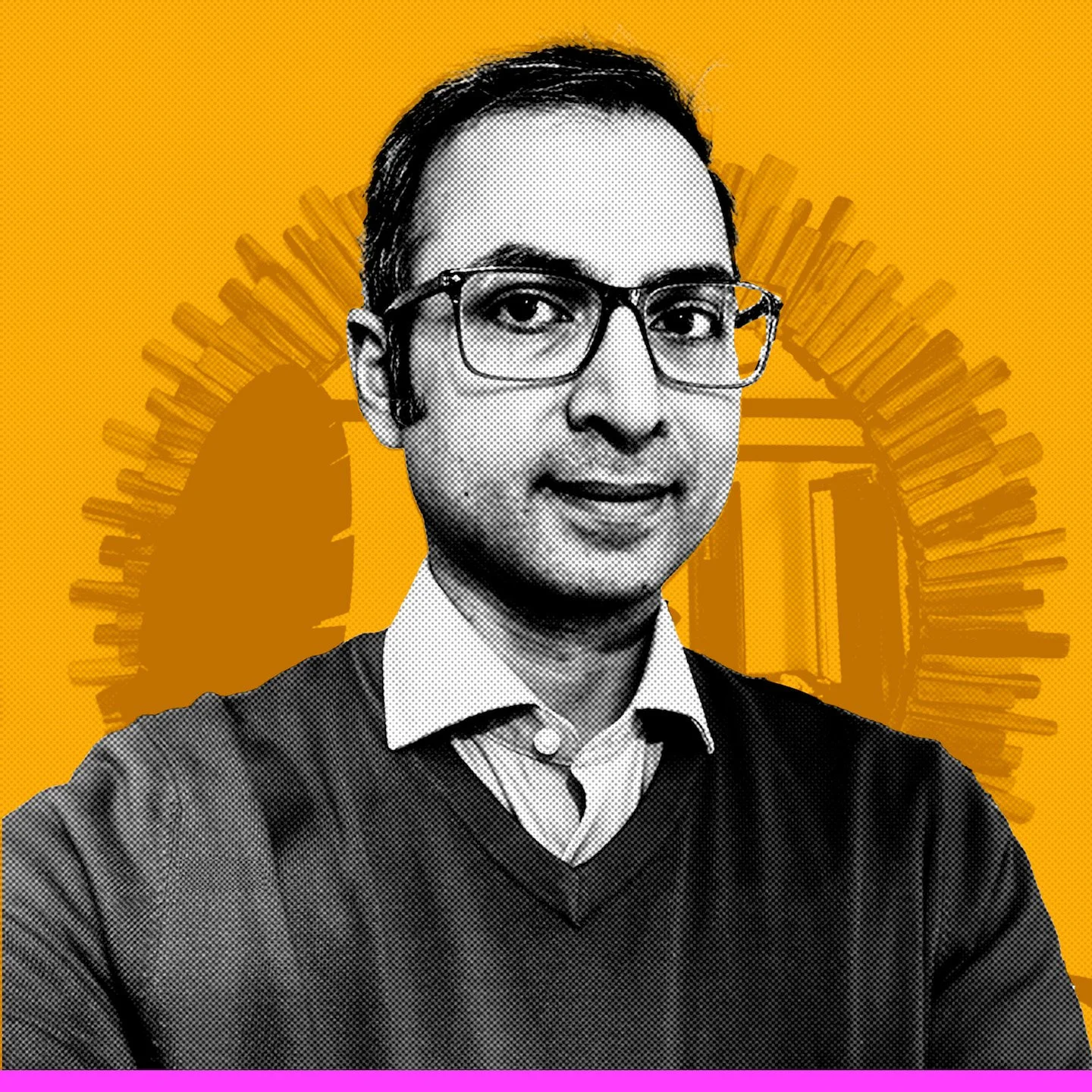
Photo rendering by Austin Hughes
In his Substack newsletter Psychiatry at the Margins, Awais Aftab explores scientific, philosophical, and clinical controversies surrounding mental health. A psychiatrist, educator, scholar, and writer, Aftab brings a critical perspective to debates about diagnosis, psychopharmacology, and psychiatry’s relationship to other fields. In this interview with TAP’s Austin Ratner, Aftab discusses the challenges facing contemporary psychiatry and the promises and perils of contemporary psychoanalysis.
What drove to you to start a Substack newsletter and what led you to call it “Psychiatry at the Margins”?
I have always had an interest in blogging, and writing is a good way for me to work through problems and develop ideas. I kept a personal blog focused on philosophical, literary, and theological issues when I was a medical student in Pakistan, and it had a respectable following in the Pakistani blogosphere. From 2019 to 2022, I was doing an interview series for Psychiatric Times, Conversations in Critical Psychiatry, and I was active on Twitter, which was, back then, the venue for wide-ranging, interesting, provocative, and transdisciplinary conversations. After Elon Musk acquired Twitter and the academics on Twitter either withdrew or migrated elsewhere (unsuccessfully to Mastodon, and then to Bluesky and LinkedIn with partial success), I needed another venue that provided intellectual stimulation.
There was a blogging revival happening – the Silver Age of Blogging, so to speak – and Substack was at the center of it. After years on Twitter, I was also missing longform writing. So starting the Substack newsletter seemed the right move. I was hesitant at first because I wasn’t sure if I could commit to the effort to write that regularly, but once I started, I found I couldn’t stop, and the favorable reception solidified that decision.
Regarding the name, “margins” is a nod towards several different meanings. There are margins of the discipline itself, at the edge of what is mainstream, at the margins of what is known. There is the boundary where psychiatry engages with its critics. There is the sense of marginalized voices, bringing in first-person psychiatric accounts. And then there is the sense of marginalia, which is best articulated by Peter Zachar (a friend and an intellectual hero of mine), so I’ll share his words: “In Psychiatry at the Margins, the ‘margins’ may refer to the overlapping boundaries between psychiatry and related disciplines, but margins are also where we can make notes and scribble out insights to augment and amplify what is already on the page. Likewise, Psychiatry at the Margins is an invitation to ponder what is already on the page and hopefully join in and augment the discourse, debate, and conversation.”
You started Psychiatry at the Margins in 2022 and it now has over 25,000 subscribers. Why do you think it’s been so successful?
My impression is that there was, and still is, a gap in public and professional discourse, where very few people were (a) talking about contested issues in psychiatry and psychology in a thoughtful manner and from a philosophically-informed perspective, (b) writing in a manner that was accessible and public-facing but also academia-adjacent, and (c) writing without falling into the trap of polarization that has historically characterized discussions of psychiatry. I’ve tried to thread that needle, and I think readers seem to have found that valuable.
What do you see as the biggest challenge facing the fields of psychiatry and mental health today?
It’s counterproductive to pick one because we are facing a series of interconnected challenges, all of them quite severe. Consider three domains: scientific, clinical, and public relations.
On the scientific side, the 20th-century assumption that there are discrete, disease entities in psychopathology has largely collapsed (although many psychiatrists still desperately try to hold on to this belief), and what we have instead is this really complicated tangle of processes that are unfolding across brain, body, psyche, and environment. We need new ways of thinking and talking about these problems, such as dimensional hierarchies, network theories, biotypes, complex systems, predictive processing, and all this means that there are no easy answers regarding etiology and new treatments. The arrogance of the Decade of the Brain is rather obvious in hindsight.
On the clinical side, the relational aspects of care have severely deteriorated. The care provided to the average person has become impoverished, more focused on the diagnostic label than a multifaceted diagnostic formulation, more dependent on medications and manualized psychotherapies than relational psychiatric practice and depth-oriented therapies; attention has become scarce, clinical encounters more impatient.
On the public relations side, for years the public was fed a very disease-focused narrative, with buzzwords like “chemical imbalance.” “brain disorders,” and “medications that work like insulin,” and it has become obvious that a lot of that was, basically, bullshit. The vacuum is being filled by the new antipsychiatrists, people who don’t even believe in the reality of “mental illness” and have all sorts of vendettas against psychiatry, and the response of the mental health professions to this unprecedented challenge of public mistrust is extremely underwhelming. Psychiatric leadership mostly appears unequipped to communicate to the public in a manner that is transparent, humble, nondefensive, and truth-tracking.
Have you studied psychoanalysis, either formally or informally? Who introduced you to it?
I got exposed to psychoanalytic ideas in my teenage years through secondary literature on Freud. In medical school, reading books by Irvin Yalom taught me a healthy respect for dynamically oriented psychotherapy, although Yalom focused a lot more on existential issues. During my residency, we had many didactics on psychodynamic psychotherapy and in one of the courses we read Psychoanalytic Psychotherapy: A Practitioner’s Guide by Nancy McWilliams, which I really enjoyed. Psychodynamic Psychotherapy: A Clinical Manual by Deborah Cabaniss was another text we used. Most helpful in my training was the experience of my working with my psychotherapy supervisor, a psychiatrist and psychoanalyst, Drew Clemens, for my psychotherapy clinic; he is a very well-respected psychoanalyst in the Cleveland psychoanalytic community, and I was among the last psychiatry residents he supervised before he retired, so I feel quite lucky to have worked with him.
The book that left the strongest impression on me probably is Psychoanalytic Diagnosis by Nancy McWilliams. I read it after I had graduated from residency, but it offers such a remarkable way to think about people’s lives. Like so many others, I found Jonathan Shedler’s work to be a wonderful introduction. David Mintz’s work on psychodynamic psychopharmacology has also influenced me a great deal, and I’m very grateful for that.
For years the public was fed a very disease-focused narrative, with buzzwords like “chemical imbalance.” “brain disorders,” and “medications that work like insulin,” and it has become obvious that a lot of that was, basically, bullshit.
What is your take on psychoanalytic psychology and its value for psychiatry and mental health? What are some of your criticisms of psychoanalytic psychology?
As would be obvious by now, I have great admiration and respect for psychoanalysis. Psychoanalysis possesses a clinical wisdom and an appreciation of the complexity of our mental lives that is unparalleled in psy-sciences. And I think psychiatry has much to gain by keeping the psychoanalytic sensibility alive.
I suppose my frustrations with psychoanalytic psychology are really frustrations with people in the psychoanalytic community. The communities are often quite intellectually insular and people can be unaware of developments in psy-sciences outside of psychoanalysis to an alarming degree. The training culture brings a certain sort of incestuous (cough) energy. Some practitioners openly disparage other psychotherapeutic modalities, to the point of not considering them “real” psychotherapy, which I find insulting. Others dismiss psychiatric classifications in ways that are scientifically and clinically uninformed. And some wave away the epistemic standards the rest of the sciences hold themselves to. Many psychoanalysts often have little familiarity with psychometrics and little sense that psychological hypotheses are speculative and fallible, or that persuading the broader scientific community is a difficult but necessary task. Of course, these are generalizations, but I think these attitudes are common enough to be problematic. Psychoanalysis has a lot to gain by engaging with the broader psychological and neuroscientific community. (One psychologist I want to give a shoutout to is Orestis Zavlis, who really has a gift in speaking the language of psychodynamic psychotherapy but also the language of psychometrics and computational psychology.)
You make a distinction between Freud and later psychoanalysts. What’s the difference, in your view? What are some of Freud’s most important ideas in your view? What are some of Freud’s mistakes?
When I point out that there is a lot more to psychoanalysis than Freud, I am simply echoing the rather obvious fact that psychoanalysis has undergone significant intellectual evolution since Freud. For instance, Freud and Beyond (Stephen A. Mitchell and Margaret J. Black, 2016) is the name of a popular book on psychoanalysis. Freud was working with a drive theory model; some of the subsequent developments include ego psychology, Kleinian theory, object relations, interpersonal psychoanalysis, self-psychology, Lacanian tradition, the relational turn, mentalization, neuropsychoanalysis, etc. For me, Kernberg’s work on personality organization is really important.
Freud of course remains relevant as much of psychoanalysis has evolved in conversation with these ideas. The most important ideas have become so ubiquitous to seem almost commonsensical. The dynamic unconscious, defense mechanisms, ambivalence, transference, the recreation of early relational patterns, the talking cure, symptoms serving a psychological purpose, overdetermination, and resistance would be some prominent examples.
I think Freud’s biggest mistake was in encouraging deference to his ideas rather than encouraging criticism and dissent.
Speaking of Psychiatry at the Margins, psychoanalysis is often described by both its practitioners and its detractors as having been marginalized. Do you think that’s an accurate characterization? How do you think psychoanalysis can reintegrate itself?
Psychoanalysis has been marginalized in terms of institutional power, prestige, and uptake, but at the same time, psychodynamic thinking remains quite alive and well-represented in the psychotherapy world. I think the biggest problem for psychoanalysis was that it didn’t institutionalize a scientific culture. It never really developed a collective practice that took the scientific method and the norms of the scientific world seriously, and even now, I routinely encounter psychoanalytic folks who think psychology should “give up trying to be a science” and should embrace arts, humanities, and philosophy. The problem is that psychoanalysis is trying to do what sciences do—arrive at generalizable knowledge about our mental lives and how they go awry—and simply cannot afford to pretend that it is not in the business of making empirical claims and doesn’t need to pay attention to the scientific method. I do think the new generation of folks interested in psychoanalysis are more pluralistic, less insular, more scientifically engaged, and more self-critical, and I am hoping that there is a bright future ahead.
Published October 2026