When Insight Becomes a Weapon
By Stephanie Newman, PhD

Your partner is not your patient, and they may not appreciate your interpretations.
Dear Psychoanalyst,
My wife and I have had years of individual psychotherapy and it has helped us both a lot. Sometimes, however, insight gets weaponized in our house. I’ll accuse her of projecting her own issues onto me and finding fault with me for no rational reason and vice versa. When one of us interprets away the other’s feelings as belonging to the past, not to the present relationship, the other can feel unheard or invalidated. How do we get past this in our often-deadlocked arguments?
Signed,
G
Dear G,
You make an interesting observation about weaponized insights and sticking points. Maybe all psychoanalytic devotees should come with a warning label: Caution: Tends to wield interpretations when overheated.
Or not. But I do think a reframe about the complexity of couples’ impasses might help.
Both you and your wife are savvy enough to understand how marital dynamics work. You know that fighting words push old buttons. You are aware that significant people and experiences from the past exacerbate current tensions and deepen present stalemates. In short, you know there are “ghosts” in your living room playing a hidden role in your arguments (with a shout-out to the great Selma Fraiberg!).
Knowing all this, you both use insights gleaned from analytic work—along with intimate details the other has shared in previous conversations—to flush the ghosts out into the open. The problem is, this can feel invalidating rather than illuminating.
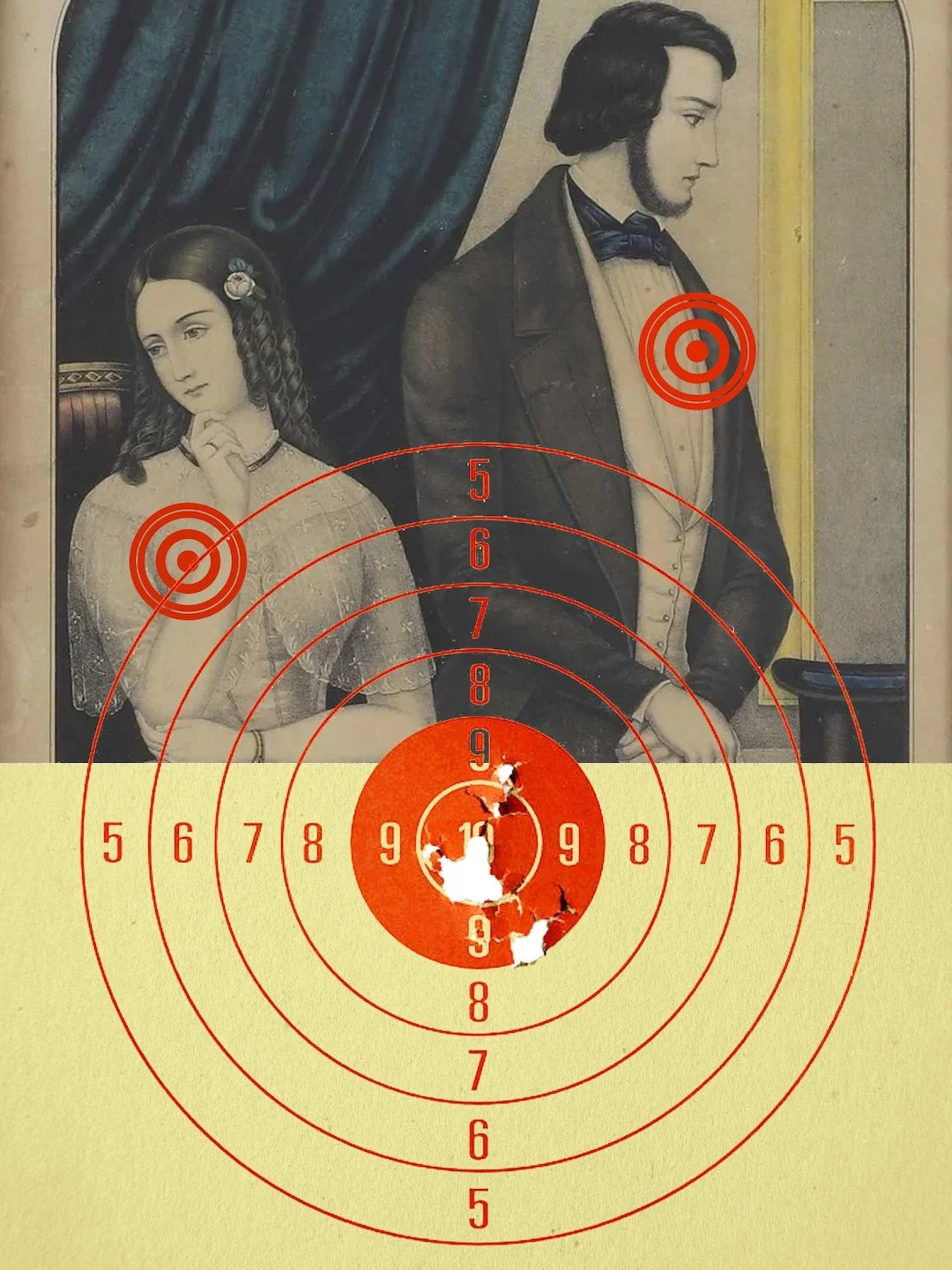
Illustration by Austin Hughes
So here’s my suggestion, G: instead of responding to the “ghosts,” try looking at the person standing in front of you. Before you start interpreting, before you dead-end the conversation, try to make space for your spouse’s story even as you are flooded with anger or overwhelmed by vulnerable feelings.
In other words, instead of accusing each other of projection, I’d encourage you and your wife to listen deeply and be open to the other person’s experience. This might take practice. Active, deep, listening—even when you suspect the other is reenacting a pattern from the past—is a challenge. But it’s the only way to open up communication and halt the impasses you describe.
It sounds as if you and your wife speak frequently and openly and feel comfortable airing grievances. This is great. Arguments and stalemates are not a sign that a relationship is flawed. They are a signal that deeper communication is needed. Offering a psychoanalytic interpretation of your wife’s behavior may feel like you are going deeper—it’s called “depth psychology,” after all—but to her it may feel like you are setting yourself up as an aloof authority.
To be clear, I’m not saying that you and your wife are never projecting your feelings or reenacting past patterns. These things happen, and it can be useful to notice them. But every new argument happens in the present moment, and you both need to be open to each other’s point of view about what is happening in the here-and-now, even when that perspective inevitably contains echoes of the past.
As in any argument, you need to practice dual vision here: step into your wife’s shoes and then be ready to step back out again, even when you are angry and in pain yourself. That is my working definition of empathy. You might try asking a question about what else is going on at the moment and possibly informing the current stalemate—as long as you ask with genuine curiosity and feel open to the response. Again, none of this is easy when you feel flooded or overwhelmed. But given the psychologically minded and insightful nature of your question, I have a feeling you can do it.
Holding onto empathy for a partner when you feel they have been invalidating or aloof is challenging. Working with a couples therapist to unlock knots and change patterns of communication can help break cycles involving lapses in communication and can take the bite out of weaponized projections.
Your relationship is alive and evolving. I have a sense, as you suspect, that breaking up familiar deadlocks like these will only strengthen your bond.
In Ask a Psychoanalyst, Stephanie Newman, PhD, responds to reader questions about therapy, relationships, and the psychopathology of everyday life. You can submit a question by emailing advice@tapmag.org.
This column is for general educational and informational purposes only and is not a substitute for professional advice, diagnosis, or treatment. Reading or submitting a question does not create a therapist–client relationship. Submitting a question implies acceptance of our submission terms.
Published September 2026